
"UK coffee truck"
146000 article(s) found

A brief introduction to the description of flavor, taste and aroma characteristics of spicy and unrestrained Kenyan boutique coffee beans
Almost all Kenyan coffee is sold through the coffee exchange in Nairobi, the capital. Coffee auctions are held at coffee exchanges every Tuesday during the harvest season. Traders with trading qualifications will get raw bean samples in advance, and after the cup test, they will choose the raw beans they like. In the following auction, the highest bidder will get. The coffee auction system in Kenya is considered

A brief introduction to the Market Price of Fruit-flavored Fine Coffee Bean varieties in Kenya
Bourbon Bourbon was first brought to Kenya for planting. In the 1950s, the then agricultural research institution Scott Laboratory selected two excellent hybrids, SL-28 and SL-34, through unremitting efforts, subverting the long-standing prejudice of artificial breeding without excellent natural varieties. SL-28 and SL-34 helped Kenyan Coffee form its own unique

A brief introduction to the cultivation of delicious Kenyan boutique coffee beans, geographical location, climate and altitude
Like the choice of other coffee producing countries, although SL-28 and SL-34 have stood the test of time and cultivated generation after generation of faithful pumps for Kenyan coffee, the Kenyan government and the Coffee Research Institute (Coffee Research Foundation) have begun to promote a new variety, Ruiri 11, for the sake of coffee yield and disease resistance.

A brief introduction to the market price of spicy and unrestrained Kenyan boutique coffee beans
Large coffee processing farms in Kenya usually have independent processing facilities. A large number of small farmers usually pick ripe coffee fruits by hand. Coffee picking is a labor-intensive job that requires the whole family to deploy and even hire workers during the harvest season. The fresh fruits of the picked coffee need to be promptly transported to the cooperative-owned coffee processing plant for pulping and transportation.

A brief introduction to the flavor, taste and aroma characteristics of delicious Kenyan boutique coffee beans
Almost all Kenyan coffee is sold through the coffee exchange in Nairobi, the capital. Coffee auctions are held at coffee exchanges every Tuesday during the harvest season. Traders with trading qualifications will get raw bean samples in advance, and after the cup test, they will choose the raw beans they like. In the following auction, the highest bidder will get. The coffee auction system in Kenya is considered

A brief introduction to the Origin, Development, History and Culture of delicious Kenyan Fine Coffee beans
Almost all Kenyan coffee is sold through the coffee exchange in Nairobi, the capital. Coffee auctions are held at coffee exchanges every Tuesday during the harvest season. Traders with trading qualifications will get raw bean samples in advance, and after the cup test, they will choose the raw beans they like. In the following auction, the highest bidder will get. The coffee auction system in Kenya is considered

A brief introduction to the treatment method of grinding degree and baking degree of glossy Kenyan boutique coffee beans
Bourbon Bourbon was first brought to Kenya for planting. In the 1950s, the then agricultural research institution Scott Laboratory selected two excellent hybrids, SL-28 and SL-34, through unremitting efforts, subverting the long-standing prejudice of artificial breeding without excellent natural varieties. SL-28 and SL-34 helped Kenyan Coffee form its own unique

A brief introduction to the Origin, Development, History and Culture of Fruit-flavored Kenyan Fine Coffee beans
Mainly by large farms (Estate) and cooperatives (Cooperatives) two types. The former generally has a large planting area and has independent coffee processing facilities. Most coffee production is done by a large number of small farmers, who form coffee cooperatives. The coffee cooperative society employs special managers to supervise the coffee handling process of its members, even fine enough.

Yunnan small Coffee Bean brewing suggestion sharing the difference between Iron truck and Katim Coffee varieties
Professional coffee knowledge exchange more coffee bean information please pay attention to the coffee workshop (Wechat official account cafe_style) Yunnan small coffee beans are iron pickup or Katim? What is the difference between the flavor of solarization, washing and honey treatment? At present, the coffee varieties in Yunnan are Bobang, Tippica, and Katim, which

A brief introduction to the description of flavor and aroma characteristics of glossy Kenyan boutique coffee beans
Compared with shading planting in many high-quality producing areas, Kenyan coffee is obviously more spicy and unrestrained, and shade trees are not common. In addition, Kenyan coffee rarely participates in certification, variety and environmental factors make the use of pesticides necessary, and organic certification, which is popular in other countries, becomes rare in Kenya. Kenya coffee harvest season there are two harvest seasons in Kenya, the main harvest
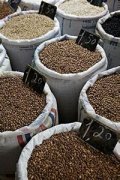
A brief introduction to the origin, development, history and culture of glossy Kenyan boutique coffee beans
Kenya coffee harvest season there are two harvest seasons in Kenya, the main harvest season is from October to December and the secondary harvest season is from May to July. Large coffee processing farms in Kenya usually have independent processing facilities. A large number of small farmers usually pick ripe coffee fruits by hand. Coffee picking is a labor-intensive job, which requires the whole family to go out or even return during the harvest season.

A brief introduction to the treatment method of grinding degree and baking degree of fruit-flavored Kenyan fine coffee beans
Bourbon Bourbon was first brought to Kenya for planting. In the 1950s, the then agricultural research institution Scott Laboratory selected two excellent hybrids, SL-28 and SL-34, through unremitting efforts, subverting the long-standing prejudice of artificial breeding without excellent natural varieties. SL-28 and SL-34 helped Kenyan Coffee form its own unique

A brief introduction to the cultivation of spicy and unrestrained boutique coffee beans in Kenya, geographical location, climate and altitude
Coffee cultivation in Kenya is mainly divided into two types: large farms (Estate) and cooperatives (Cooperatives). The former generally has a large planting area and has independent coffee processing facilities. Most coffee production is done by a large number of small farmers, who form coffee cooperatives. The Coffee Cooperative Society hired special managers to supervise the coffee handling of its members.

A brief introduction to the treatment method of grinding degree and baking degree of Kenyan boutique coffee beans with rich taste
Coffee cultivation in Kenya is mainly divided into two types: large farms (Estate) and cooperatives (Cooperatives). The former generally has a large planting area and has independent coffee processing facilities. Most coffee production is done by a large number of small farmers, who form coffee cooperatives. The Coffee Cooperative Society hired special managers to supervise the coffee handling of its members.

Nestle Coffee detected carcinogens in the UK
Nestle Coffee issued a response to carcinogens detected in the UK according to a reference source: the British Food Standards Agency recently tested 248 food samples and found that the levels of acrylamide, a carcinogen in 13 kinds of foods, are on the rise. Nestl é and Heinz have been warned. Over-standard varieties include potato chips, instant coffee and so on. A spokesman for Nestl é China said that Nestle Gold Coffee sold domestically is from Japan.
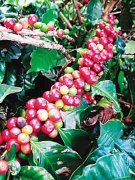
The annual consumption of coffee paper cups in the UK is huge, but the recovery rate of coffee is less than 1%.
Boutique coffee has a strict grading system. Generally, raw beans are preserved in parchment coffee beans in the form of endocarp after processing, and the endocarp is removed before export. Go through a strict grading process to ensure the uniformity of quality. And it is very important to preserve the protection in the process of transportation, such as the control of temperature and humidity, the control of ventilation, avoiding odor adsorption and so on.

A brief introduction to the treatment method of grinding degree and baking degree of spicy and unrestrained Kenyan boutique coffee beans
Large coffee processing farms in Kenya usually have independent processing facilities. A large number of small farmers usually pick ripe coffee fruits by hand. Coffee picking is a labor-intensive job that requires the whole family to deploy and even hire workers during the harvest season. The fresh fruits of the picked coffee need to be promptly transported to the cooperative-owned coffee processing plant for pulping and transportation.

A brief introduction to the cultivation of high-quality coffee beans in Kenya with rich taste, geographical location, climate and altitude
In addition to the prestigious traditional Arabica coffee, robusta coffee is also produced in the western lowlands of Kenya. Kenya coffee harvest season there are two harvest seasons in Kenya, the main harvest season is from October to December and the secondary harvest season is from May to July. Large coffee processing farms in Kenya usually have independent processing facilities. A large number of small farmers usually pick them by hand.
Englishman and Coffee
In terms of per capita tea consumption, the UK is a big tea drinker, second only to Ireland, but in terms of coffee, statistics show that 80 per cent of coffee consumption in the UK is instant coffee. This is a challenge for lovers of pure things. General Foods recently found that coffee retails more than 100 million pounds of tea in the UK, reaching 560 million pounds, including the insurance sector.

A brief introduction to the history and culture of the origin and development of Kenyan boutique coffee beans
Although the coffee auction system has effectively raised the price of high-quality coffee, it is not without drawbacks. First, the existence of many trade middlemen has eroded the interests of coffee farmers, and the high prices obtained from the auction can not be fully fed back to the hard-working coffee farmers. Second, it is difficult to accurately trace the production information of the auctioned coffee. For the increasingly prosperous boutique coffee market, traceability is the coffee raw bean review.